The Beaumont Children
The disappearance of three children from Glenelg Beach in 1966 changed how a nation watched over its young, and six decades of searches and digs have brought no answers.
The Case in One Sentence
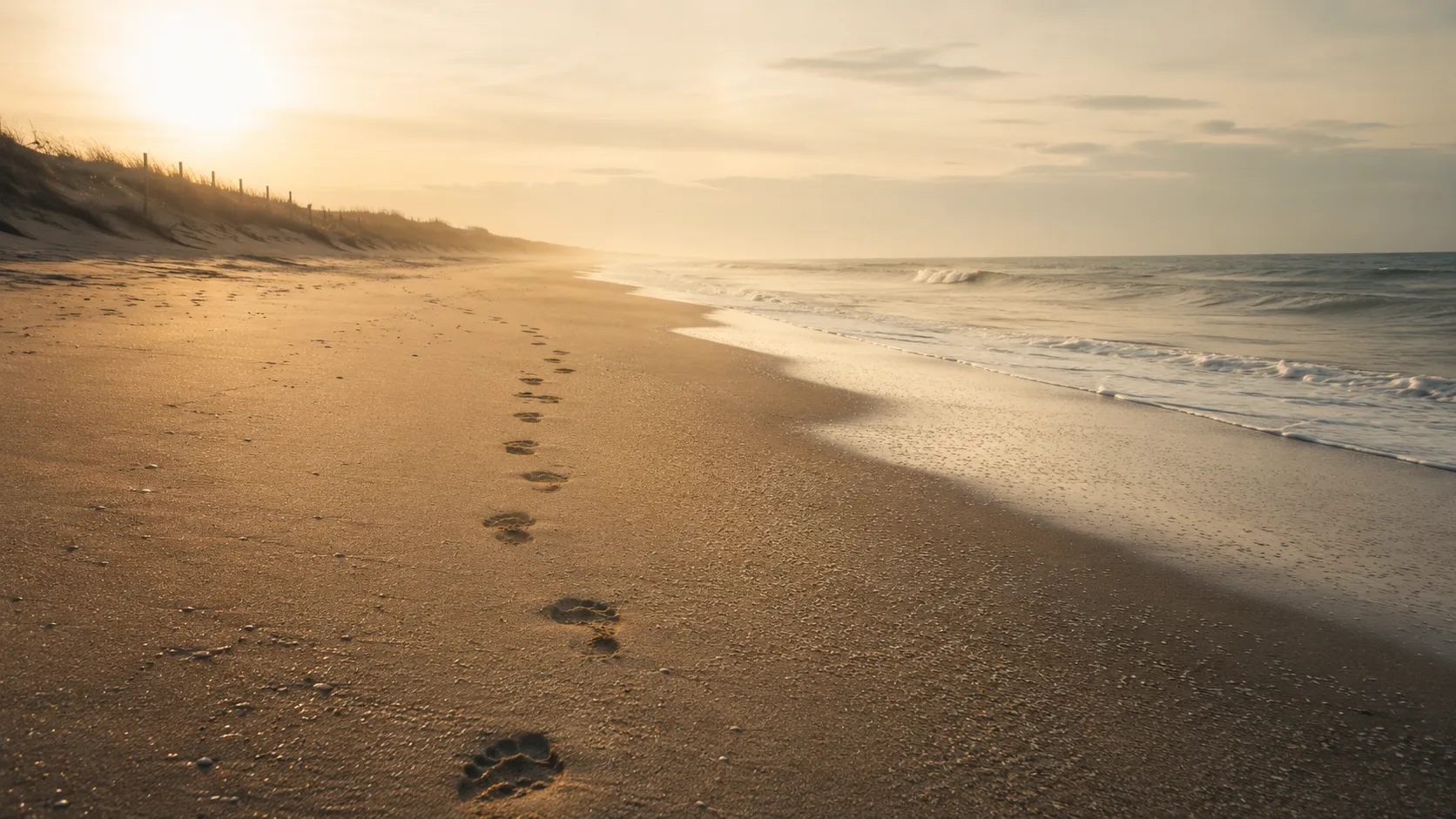
Three young siblings vanished from a crowded Adelaide beach on Australia Day 1966, and despite one of the largest investigations in Australian history, the Beaumont children have never been found.
Who Was Involved
At the centre of this story are three children. Jane Beaumont was nine years old, careful and capable in the way eldest children often are. Her sister Arnna was seven. Their brother Grant was four. They lived with their parents, Jim and Nancy Beaumont, in the Adelaide seaside suburbs, within easy reach of Glenelg Beach, a stretch of sand the children knew well and loved. On hot summer days they would make the short bus trip down to the water, a small and ordinary freedom of the era.
That freedom is part of what makes the case so enduring. In 1966, sending children off to the beach on their own was unremarkable. They were trusted, familiar with the route, and expected back by lunchtime. The people who would come to matter most in the investigation were strangers glimpsed in passing: a tall man with fair to light-brown hair seen in the children’s company, and the ordinary witnesses, a shopkeeper, a postman, a bus driver, whose fragments of memory became the spine of one of Australia’s largest missing-persons inquiries.
What Happened
On the morning of Australia Day, 26 January 1966, the three children asked their mother if they could go down to Glenelg. The day was hot, the school holidays were nearly over, and the beach would be crowded. Nancy gave them money for the trip and for lunch, and they caught the bus down to the foreshore, expected home around midday.
They never came back. As the noon bus and then later buses arrived without them, worry hardened into alarm. Several people would later recall seeing the children that day, and a recurring detail emerged: the three had been seen on and near the beach in the company of a tall, lean man in his thirties, fair-haired and sun-tanned. Witnesses noted that the normally shy children appeared relaxed and comfortable with him, which led investigators to wonder whether he was someone they had encountered before. A shopkeeper recalled the children buying food, and there was a sense that they had more money than they had left home with. By that afternoon the family’s fear had become a public emergency, and within a day much of the nation knew their names.
The Investigation
The police response was immediate and vast. Officers searched the beach, the sandhills, the surrounding streets and buildings, and monitored transport routes in case of accident or abduction. The inquiry grew into one of the largest in Australian history, drawing in volunteers, the press, and an anxious public that followed every development.
Some episodes from those early months have become part of the case’s lore, including the decision to bring a Dutch clairvoyant to Adelaide to assist the search, an effort that produced headlines but no answers. Over the decades that followed, the investigation never truly closed. South Australia Police have repeatedly stated that the matter remains open and actively held by an investigator, and successive state governments have maintained a standing reward, which has grown over the years into a sum exceeding one million dollars, for information that could finally resolve it.
Across nearly sixty years, a number of men have been named publicly as persons of interest, chiefly by journalists, authors and private investigators rather than by the courts. None has ever been charged in connection with the children’s disappearance. Reporting around the sixtieth anniversary placed renewed attention on several figures, including a convicted offender named in connection with the family. It is essential to be precise here: police have stated plainly that there is nothing to indicate the most recently named man was involved, and the other theories remain unproven. These individuals are described only as they have been credibly reported, and no finding of guilt has ever been made against anyone in this case.
The Breakthrough
There has been no breakthrough. That is the hard truth at the heart of the Beaumont case, and honesty requires stating it directly: the disappearance remains unsolved, and the children have never been found.
What there has been instead is a long sequence of searches and excavations, each pursued in hope and each ending without resolution. The most sustained effort has focused on a former factory site in the Adelaide suburbs, once owned by a since-deceased businessman, after claims that workers were paid to dig a large hole there shortly after the children vanished. Police excavated parts of the site in 2013, and a further dig followed in 2018, which turned up animal bones and rubbish but nothing connected to the children. In February 2025, an independent member of parliament organised a third, privately funded excavation of the site, joined by a forensic archaeologist, an author and a former detective. Over roughly a week, the team removed thousands of cubic metres of soil and dug well below the level reached before, examining a pit uncovered during the work. As with every search before it, it found no trace of Jane, Arnna or Grant. South Australia Police monitored the dig but indicated it was following a theory they did not believe was supported by the evidence.
Where the Case Stands Today
Sixty years on, the case is cold but not abandoned. South Australia Police continue to list it as open, the reward still stands, and tips still arrive. The men once named as suspects are dead or, where living, have never been charged, and the central figure glimpsed with the children on that hot January day has never been identified.
Jim and Nancy Beaumont lived out their lives without ever learning what became of their children, a private grief carried across decades in full public view. Each anniversary brings fresh coverage, new books and competing theories, and occasionally a new dig, yet the essential facts remain exactly where they stood in 1966. Three children went to the beach and did not come home, and no one has ever been able to say with certainty what happened to them.
Why This Case Still Matters
The disappearance of the Beaumont children is often described as the moment Australian childhood changed. Before 26 January 1966, it was ordinary for children to roam, to catch buses alone, to spend whole days unsupervised at the beach. Afterwards, a quiet vigilance settled over the country. Parents began to watch more closely and trust strangers less, and the easy freedoms of an earlier era never fully returned.
The case also set a template for how Australia treats its most painful unsolved crimes: kept open rather than closed, revisited at every anniversary, and pursued by police and private investigators alike long after most witnesses have died. It endures partly because it remains unresolved and partly because it touches something universal, the fear of losing a child to an ordinary day. For an archive like this one, the lasting obligation is simple. The children deserve to be remembered as children, the search deserves to be recorded accurately, and the answer, if it ever comes, deserves to rest on evidence rather than speculation.
Source discipline
Sources & Further Reading
- Forensic expert checking 'pit' at Beaumont excavation InDaily
- Beaumont children disappearance: excavation digs into one of Australia's biggest cold cases The Nightly
- Beaumont children update: a named person of interest, and the police caveat The Nightly
- The Beaumont children: Australia's enduring mystery The Australian Women's Weekly
Further Viewing
Further Viewing
The missing Beaumont children: inside the investigation · 9 News Australia
A major Australian national news broadcaster revisits the 1966 Glenelg Beach disappearance and the investigation.
Selected as supplementary viewing from an approved source. Case on the Case does not control third-party video content, and videos are supplementary, they do not replace the written sources above.
Keep reading
More from Missing & Vanished
Brandon Swanson
Brandon Swanson, a 19-year-old Minnesota college student, vanished on May 14, 2008, after his car went off a rural road and his late-night phone call to his parents cut off mid-sentence. He was never found, and his case led Minnesota to enact Brandon's Law.
Asha Degree
The 2000 disappearance of nine-year-old Asha Degree, who walked alone from her Shelby, North Carolina home into a rainstorm and vanished, and the forensic evidence that decades later reopened the case as a suspected homicide.
The Springfield Three
On June 7, 1992, three women vanished overnight from a home in Springfield, Missouri, leaving their cars, purses, and pets behind. Decades later, the disappearance of Sherrill Levitt, Suzie Streeter, and Stacy McCall remains unsolved.