Hidden in Plain Sight: The Golden State Killer
An ordinary-seeming man, a four-decade cold case, and the genealogy breakthrough that finally put a name to the Golden State Killer.
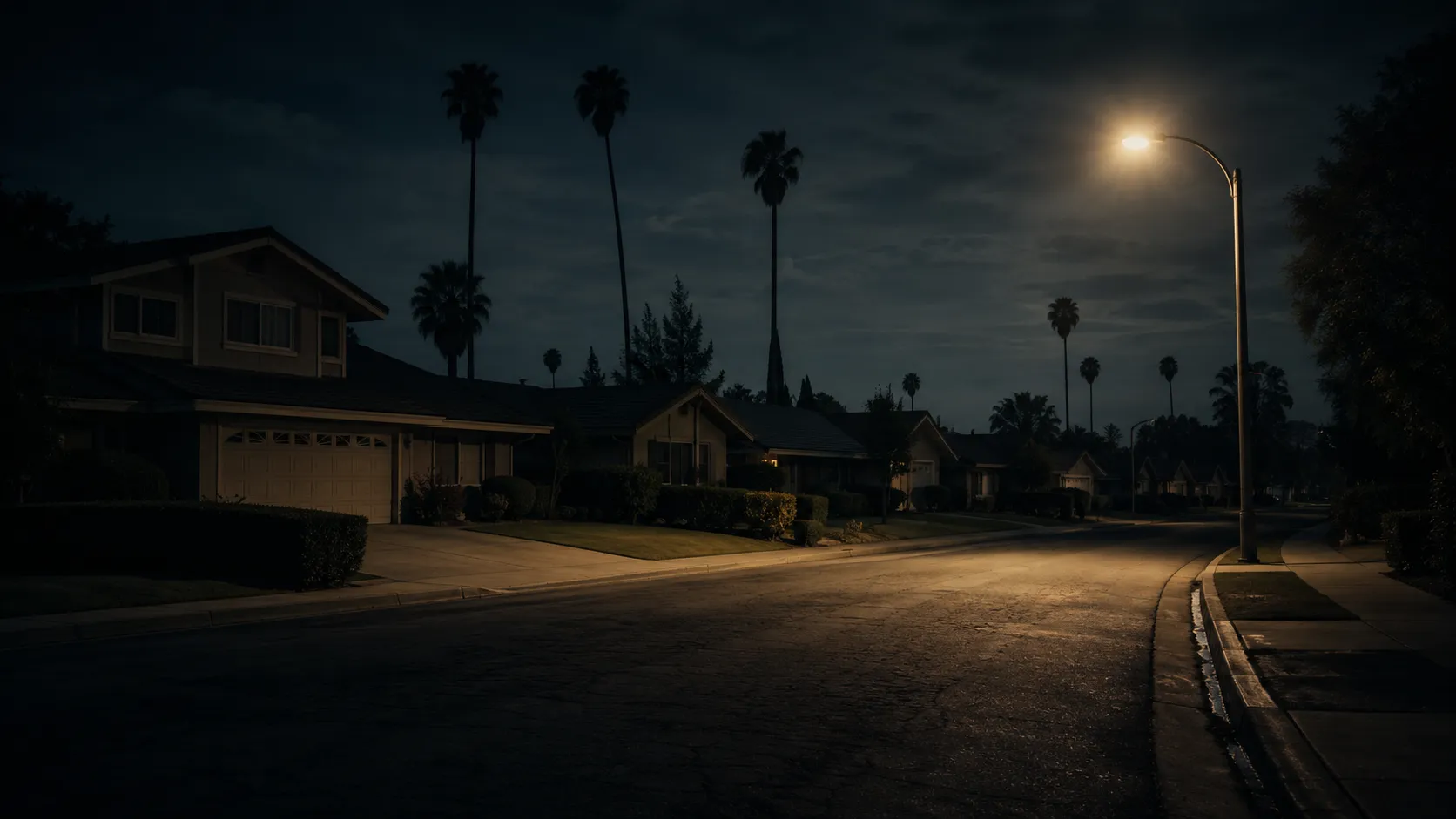
The Case in One Sentence
For more than 40 years the Golden State Killer hid behind an ordinary life until, in 2018, investigators uploaded crime-scene DNA to a public genealogy database, built a family tree, and identified former police officer Joseph James DeAngelo.
Who Was Involved
At the center of this case are the victims and survivors: the people murdered across California between the mid-1970s and 1986, and the dozens of women and families who lived for decades with assaults that were never charged. Prosecutors would later describe the scale of the violence as “simply staggering,” counting 87 victims across 53 crime scenes in 11 California counties. They are the reason this story exists.
Around them stand the investigators who refused to close the file. Foremost among them in the final chapter was Paul Holes, a forensic scientist turned cold-case investigator who had worked the case for years, and Barbara Rae-Venter, a retired patent attorney who taught herself genetic genealogy and brought structure to the genetic search. They worked alongside the FBI, the Sacramento County District Attorney’s Office under Anne Marie Schubert, and detectives across multiple counties.
A separate figure shaped how the public came to know the case: the late crime writer Michelle McNamara, who popularized the name “Golden State Killer” and helped keep public attention alive. She died in 2016, before an arrest was made, and her book “I’ll Be Gone in the Dark” was published in early 2018.
The man eventually held responsible, Joseph James DeAngelo, a former police officer, enters this account last and deliberately so. For four decades he lived an unremarkable suburban life. This case is not a portrait of him; it is the story of how an ordinary-seeming man was found.
What Happened
Beginning in the mid-1970s, a single offender committed a long series of burglaries, rapes, and murders across California. Because the crimes spanned regions and years, and because investigators did not at first know they were connected, the offender acquired different names in different places: the Visalia Ransacker, the East Area Rapist in Northern California, and the Original Night Stalker in Southern California.
The record now attributes at least 13 murders and dozens of rapes to this one person, alongside numerous burglaries, with crimes running roughly from the mid-1970s through 1986. The geographic spread and the long timeline are part of why the case proved so difficult: for years, jurisdictions were effectively investigating pieces of a puzzle without knowing they shared an edge.
This article does not recount the assaults in detail. What matters here is the shape of the harm, an offender who moved between communities and decades, and the long silence that followed.
The Investigation
For years the cases were worked separately. A turning point came in 2001, when DNA testing confirmed that the East Area Rapist and the Original Night Stalker were the same offender, prompting investigators to combine the files. That linkage proved the cases belonged together, but it did not produce a name. The offender’s DNA profile matched no one in any criminal database.
That is the wall this case kept hitting. Investigators had the killer’s genetic signature, recovered and preserved from crime scenes, and they had decades of meticulous casework. What they did not have was a suspect. The profile was a key with no lock to fit. By the 2010s, with renewed publicity and a reward offered, the case was active again in the public mind, yet the central problem remained unchanged: a known DNA profile, and no match.
The Breakthrough
The breakthrough came from a then-novel method now called investigative genetic genealogy. Rather than searching only criminal databases, which had failed for decades, investigators took the offender’s crime-scene DNA, including a sample drawn from a preserved 1980 case, and uploaded a profile to GEDmatch, a public genealogy database where people voluntarily share their DNA results to find relatives.
The search did not return the killer. It returned distant relatives, genetic cousins who shared portions of the profile. From there, Barbara Rae-Venter and the investigative team did the painstaking work that genealogy actually requires: building family trees outward from those matches using obituaries, census records, and public databases, working back to common ancestors and then forward again through the generations. They narrowed the resulting field by age, location, and other characteristics, reducing more than a thousand genetic cousins to a small handful of candidates.
One of them was Joseph James DeAngelo. Crucially, genealogy did not convict anyone; it pointed a direction. To confirm, investigators surveilled DeAngelo and collected discarded DNA, reportedly from a car-door handle and a tissue in his trash, and matched it to the crime-scene profiles. As Paul Holes later noted, the final stretch took only about four and a half months from the first genealogy results to the arrest. DeAngelo was taken into custody on April 24, 2018.
Where the Case Stands Today
The case is solved and closed. On June 29, 2020, in a joint prosecution spanning multiple counties, Joseph James DeAngelo pleaded guilty to 13 counts of first-degree murder and 13 counts of kidnapping to commit robbery, and admitted to a long list of additional crimes, including dozens of rapes that could no longer be charged because their statutes of limitations had expired. Prosecutors accepted the plea in part to avoid a prolonged death-penalty trial given the age of the crimes, the defendant, and the surviving victims.
On August 21, 2020, a Sacramento County judge sentenced DeAngelo to life in prison without the possibility of parole, imposing multiple consecutive life terms. Because he entered guilty pleas in open court, his guilt is a matter of legal record rather than allegation. The sentencing hearing, held in a large hall to allow for pandemic distancing, gave many survivors and victims’ families the chance to speak directly.
Why This Case Still Matters
This case matters first because of the people at its center: victims who waited decades, and survivors who described living for years without a sense of safety. The resolution did not undo the harm, but it ended the most agonizing uncertainty, the question of who.
It matters, second, as a landmark in forensic science. DeAngelo’s identification was the first widely publicized arrest obtained through investigative genetic genealogy, and it opened a method that has since helped identify suspects in well over a hundred cold cases. The technique works precisely because it does not rely on the offender ever being in a criminal database; it relies on relatives, common ancestors, and patient tree-building.
That same power is why the case also matters as an ethical question. Using public genealogy databases to find criminal suspects raises real privacy concerns, and in the years since, the U.S. Department of Justice issued policy guidance and several consumer DNA companies restricted law-enforcement access. The reasonable debate over those limits is itself part of the case’s legacy.
Finally, it is a story about persistence and care: investigators who preserved evidence across a generation, a self-taught genealogist who brought rigor to a new method, and a writer whose attention helped keep the case from fading. The lesson of “hidden in plain sight” is not that an ordinary life makes a monster invisible. It is that careful, patient work, old casework joined to new science, can find what was hidden, and give a long-silent record a name.
Source discipline
Sources & Further Reading
- Joseph DeAngelo Jr. Pleads Guilty to 13 Murders, 13 Kidnappings & Uncharged Crimes Contra Costa County District Attorney
- Golden State Killer sentenced to multiple life sentences for rapes and slayings PBS NewsHour / Associated Press
- Golden State Killer sentenced to life in prison CBS News / Associated Press
- How DNA from family members helped solve the 'Golden State Killer' case ABC News
- 'Golden State Killer' Joseph DeAngelo pleads guilty to 13 murders, gets life sentences Death Penalty Information Center
Further Viewing
Further Viewing
Police matched DNA from a public database to the Golden State Killer suspect · CBS News
CBS News on how investigators used a public genealogy database to identify the suspect.
Selected as supplementary viewing from an approved source. Case on the Case does not control third-party video content, and videos are supplementary, they do not replace the written sources above.
Keep reading
More from Solved Cold Cases
April Tinsley
Eight-year-old April Tinsley was abducted and killed in Fort Wayne, Indiana, in 1988. Her case stayed cold for thirty years, until forensic genetic genealogy finally identified her killer in 2018.

The Bear Brook Murders
How investigative genetic genealogy and a citizen sleuth finally gave names to four victims found in barrels in New Hampshire's Bear Brook State Park, decades after their deaths.

The Boy in the Box
How investigators, volunteers, and forensic genealogists spent 65 years restoring a name to Philadelphia's 'Boy in the Box,' identified in 2022 as Joseph Augustus Zarelli. His identity is now known; his murder is not.