The Boy in the Box
In 2022, Philadelphia police finally identified the boy found in a box in 1957. The breakthrough restored his name, but the question of who killed him remains open.
The Case in One Sentence
For 65 years he was 'America's Unknown Child,' until DNA and genetic genealogy gave Philadelphia's Boy in the Box his name back: Joseph Augustus Zarelli.
Who Was Involved
For most of the time anyone spent on this case, the central figure had no name. He was a small boy, roughly four years old, and for sixty-five years the people of Philadelphia knew him only as the Boy in the Box, or by the name carved on a donated headstone, America’s Unknown Child. The story of his case is, before anything else, the story of the people who refused to let him stay anonymous.
Among them were generations of Philadelphia police investigators, many of whom worked the case long after it had gone cold and some of whom died before it was resolved. There were medical examiner’s office staff and city employees who treated the boy’s burial as a personal responsibility. There was the Vidocq Society, a Philadelphia organization of investigators and forensic specialists that helped care for the case and covered the cost of the boy’s reburial in 1998. And in the final chapter there were forensic genealogists, led by Dr. Colleen Fitzpatrick of Identifinders International, who spent years coaxing answers out of badly degraded DNA.
In December 2022, all of that effort produced a name. The boy was Joseph Augustus Zarelli, born January 13, 1953, a child of West Philadelphia. His birth certificate, later confirmed through DNA, listed his parents as two lifelong Philadelphia residents, both of whom have since died. After more than six decades, the unknown child was unknown no longer.
What Happened
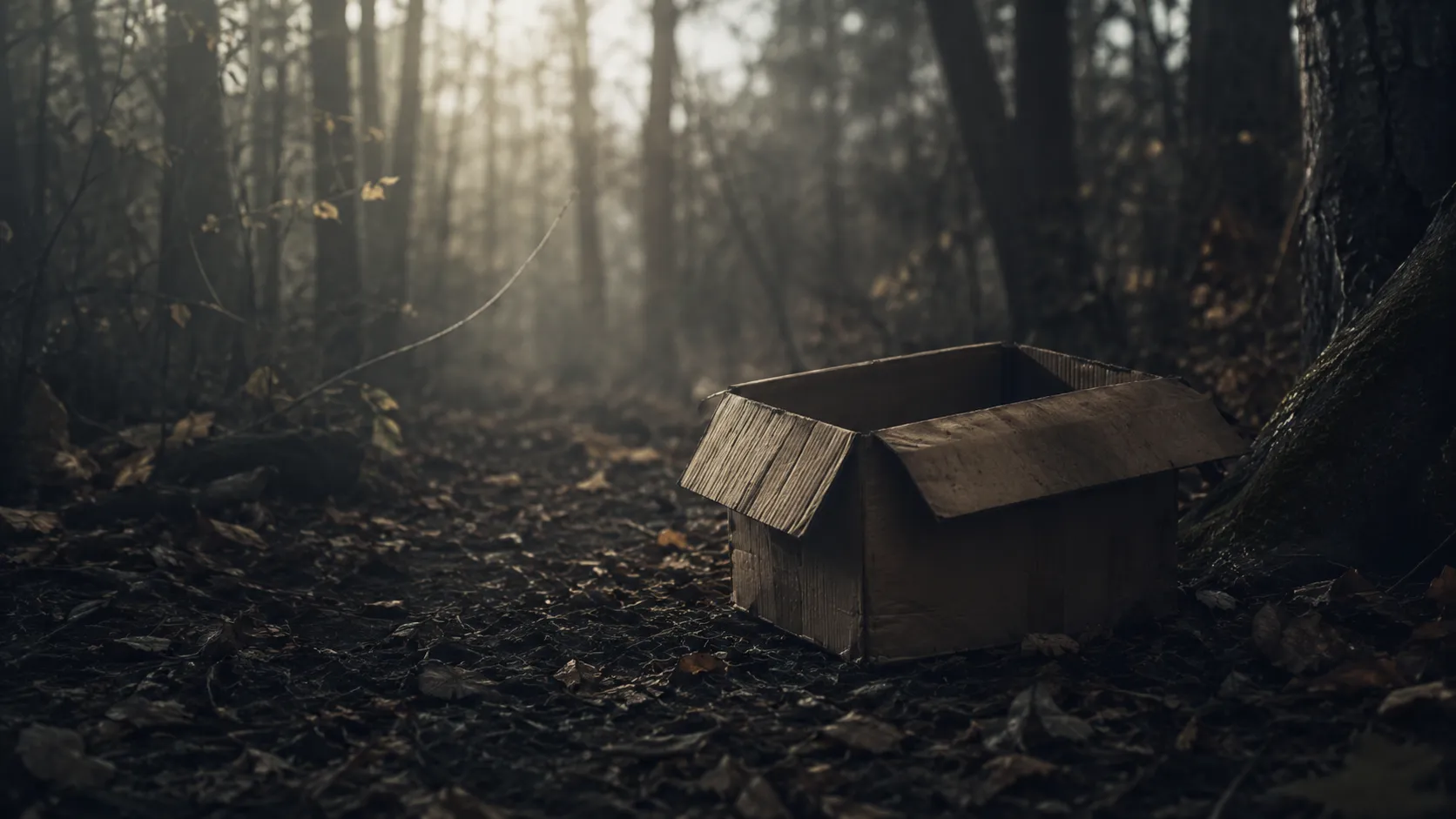
In February 1957, the body of a young boy was discovered in a wooded area just off Susquehanna Road in the Fox Chase section of northeast Philadelphia. He had been placed inside a large cardboard box, the kind that had once held a bassinet, and wrapped in a blanket. He was found on February 25, 1957.
Out of respect for the child, the details of his condition are not dwelled on here beyond what investigators have stated publicly: he was malnourished, he bore scars, and his death was treated from the outset as a homicide. No one came forward to claim him. No one had reported a boy of his description missing. He simply appeared, nameless, in the record of the city, and the search for who he was began immediately.
That search would outlast the careers and the lives of many of the people who started it.
The Investigation
The early investigation was, by the standards of 1957, enormous. Police took the boy’s fingerprints and found no match. They traced the bassinet box to a retailer and followed every physical clue the scene offered. The Philadelphia Inquirer described what followed as one of the greatest circularization efforts in the history of the city: hundreds of thousands of flyers bearing the boy’s likeness were distributed, including inserts tucked alongside gas and electric company bills, so that the question of his identity reached nearly every household in the region.
The tips came in. None of them led to an answer. Within weeks the case had stalled, and for decades afterward it remained one of the most famous unidentified-person cases in the United States. Investigators chased theories across the years, but the boy’s identity stayed out of reach.
When he was reburied in 1998 at Ivy Hill Cemetery, the Vidocq Society helped cover the costs, and the marker placed over him read America’s Unknown Child. That same year his body was exhumed so that DNA could be drawn from a tooth. A profile was developed, but it produced no usable hits against any relative. The science of the day could not yet bridge the gap between an unknown child and a family.
The Breakthrough
What finally closed the distance was forensic genetic genealogy, the same family of techniques that has reopened cold cases across the country in recent years. But this case tested the method to its limits.
The DNA recovered in 1998 had not been enough. In 2019, Philadelphia police exhumed the boy’s remains a second time to gather more genetic material for modern testing. Even then, the sample was severely degraded. Dr. Colleen Fitzpatrick, the forensic genealogist brought in to lead the work, later compared the task to piecing together a puzzle and described the genetic material as reduced to little tiny pieces. She and her colleagues spent years simply making the DNA usable.
Once they had something to work with, investigators uploaded the profile to genealogical databases and began the painstaking process of building family trees outward from distant relatives. A match from a more distant cousin who had uploaded DNA to a public database gave them the thread they needed. Genealogists traced relatives on the boy’s maternal side, which led detectives to his birth mother, and from there to his father’s side of the family. A court order produced the boy’s birth certificate, and the name on it was confirmed by DNA: Joseph Augustus Zarelli.
On December 8, 2022, Philadelphia Police Commissioner Danielle Outlaw announced the identification publicly. For sixty-five years, she said, the story of America’s unknown child had haunted the community. Bill Fleisher of the Vidocq Society put it more simply: their boy was no longer the Boy in the Box. He had a name.
Where the Case Stands Today
It is important to be precise about what was solved and what was not. Joseph Augustus Zarelli’s identity is now known. His murder is not.
The killing remains an open and active homicide investigation, and on the city’s books it is still a cold case. At the December 2022 announcement, a Philadelphia police captain said investigators had their suspicions about who might be responsible but that it would be irresponsible to share them while the case remained active. Police offered a reward for information leading to an arrest and conviction.
The obstacles are real and were acknowledged plainly. The crime is nearly seventy years old. Physical evidence has degraded over the decades, and many people who might have known the boy, including neighbors and family members, have died. Investigators have noted that if this identification had come years earlier, when more witnesses were alive to interview, the path to a resolution might have looked very different. Commissioner Outlaw framed the moment carefully: the identification closed one chapter of the boy’s story while opening another.
In the time since, his grave has been updated to bear his name, and relatives have been able to acknowledge him as one of their own.
Why This Case Still Matters
The Boy in the Box endured in public memory for the same reason it troubled investigators for three generations: a child had been killed, abandoned, and then, somehow, not missed by the wider world. No one had been looking for him. That absence is part of what makes the case so difficult to sit with, and part of why so many people, paid and unpaid, kept working it long after any reasonable hope of a name had faded.
Their persistence is the lesson. The identification of Joseph Augustus Zarelli did not arrive in a single dramatic moment. It was the result of decades of preserved evidence, careful record-keeping, repeated exhumations, advancing science, and individuals who decided this child deserved a name even if they would not live to learn it. Genetic genealogy provided the final tool, but it only worked because earlier hands had kept the case, and the boy, from being forgotten.
Today he is remembered by his real name. The work that remains is to learn how he died and at whose hands, and the case stays open in the hope that someone, somewhere, still knows.
Source discipline
Sources & Further Reading
- After 65 years, Philadelphia police identify the Boy in the Box NBC10 Philadelphia
- 'Boy in the Box' murder victim identified as Joseph Augustus Zarelli CBS News
- Philadelphia police identify victim known as the 'Boy in the Box' WHYY
- How Philadelphia police identified 'The Boy in the Box' CBS Philadelphia
- 'Boy in the Box': Philadelphia homicide case history The Philadelphia Inquirer
Further Viewing
Further Viewing
Boy in the Box: Naming America's Unknown Child · NBC10 Philadelphia
NBC10 Philadelphia on the decades-long effort and the genetic genealogy that finally named the 1957 victim.
Selected as supplementary viewing from an approved source. Case on the Case does not control third-party video content, and videos are supplementary, they do not replace the written sources above.
Keep reading
More from Solved Cold Cases
April Tinsley
Eight-year-old April Tinsley was abducted and killed in Fort Wayne, Indiana, in 1988. Her case stayed cold for thirty years, until forensic genetic genealogy finally identified her killer in 2018.

The Bear Brook Murders
How investigative genetic genealogy and a citizen sleuth finally gave names to four victims found in barrels in New Hampshire's Bear Brook State Park, decades after their deaths.

Sherri Rasmussen
In 1986, nursing director Sherri Rasmussen was murdered in her Los Angeles condominium, and police wrote it off as a botched burglary. More than two decades later, a preserved swab of DNA identified the killer as a serving LAPD detective.