Kitty Genovese
How the killing of a 28-year-old woman in Kew Gardens became a parable of urban apathy, and how later reporting dismantled the myth while honoring the victim.
The Case in One Sentence
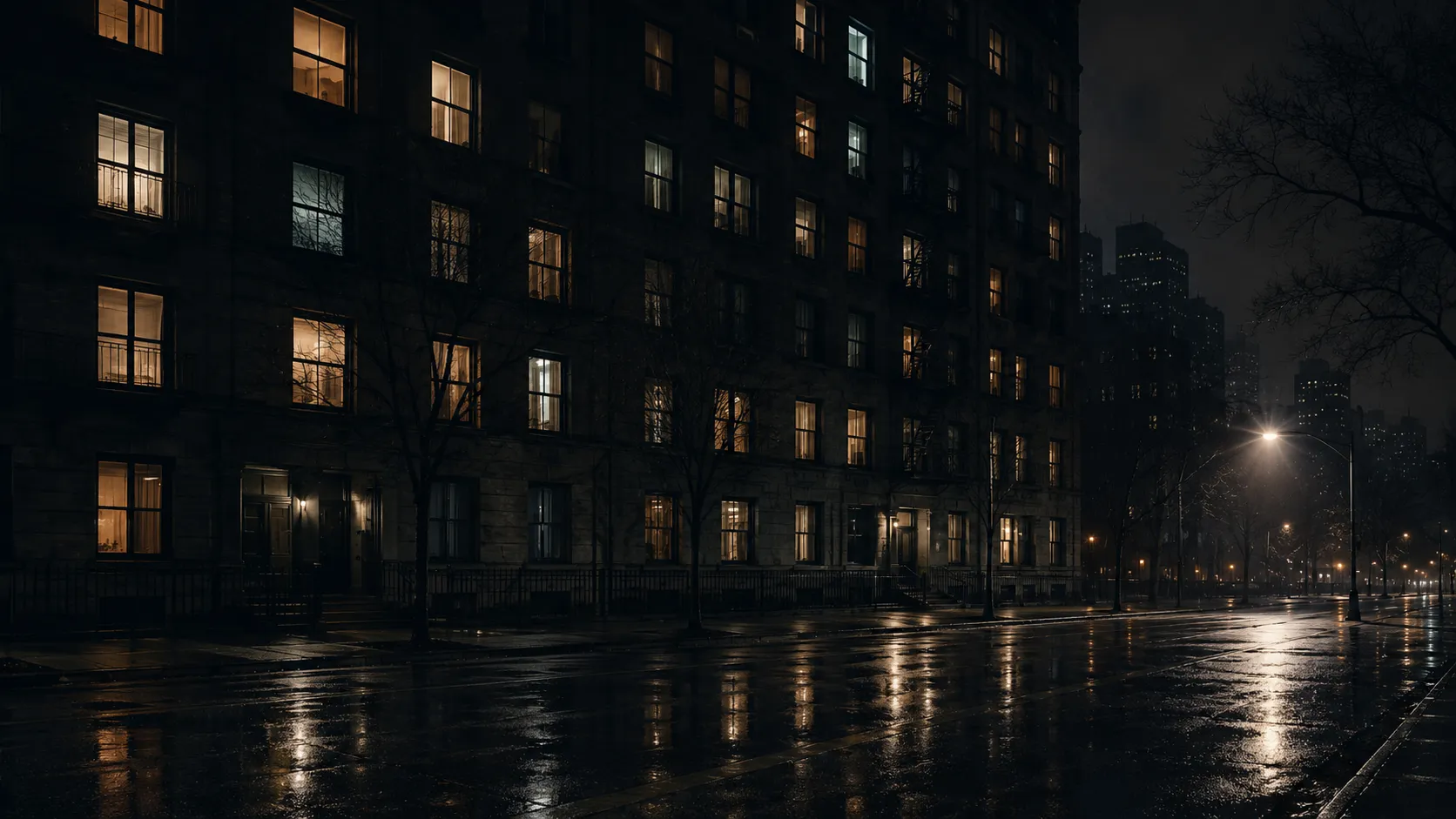
Catherine 'Kitty' Genovese was murdered in Queens in 1964, and a New York Times story claiming 38 indifferent witnesses reshaped psychology and policing before being substantially corrected as exaggerated.
Who Was Involved
Catherine Susan Genovese, known to nearly everyone as Kitty, was twenty-eight years old in the spring of 1964. She lived in Kew Gardens, a quiet residential pocket of the Queens borough of New York City, and she managed a bar in nearby Hollis. By the accounts gathered in the decades since, she was warm, capable, and well liked, a young woman with an ordinary life and ordinary plans. Her younger brother, Bill Genovese, would later spend years of his own life trying to reclaim that person from the headline she became.
The man who killed her was Winston Moseley, a Queens resident who had no prior connection to her. He was a stranger, and his crime was opportunistic rather than personal. Moseley was arrested within days, prosecuted, and convicted, and so his guilt is a matter of legal record rather than speculation.
The third party in this story is not a person at all but a newspaper account. A 1964 article in The New York Times asserted that thirty-eight respectable, law-abiding citizens watched Genovese be attacked and did nothing. That claim, more than the crime itself, is what carried the case into psychology textbooks, law schools, and the language we still use to describe public indifference. Much of what follows is the slow work of separating the woman from the legend built around her death.
What Happened
In the early hours of March 13, 1964, Kitty Genovese returned home to Kew Gardens and was attacked near her apartment by Winston Moseley. The assault was not a single uninterrupted event. According to the later reconstruction reflected in The New York Times and in independent research, there were two attacks rather than the three the original reporting described. The first occurred on the street; after at least one neighbor called out, Moseley initially retreated. He returned a short time later and attacked her a second time, in a vestibule largely out of the sight and hearing of the surrounding apartments.
Out of respect for Genovese, this account does not dwell on the physical details of the attack. What matters for the historical record is the geography and the timing, because both were later distorted. The popular image of dozens of neighbors calmly watching a prolonged murder from their windows does not match where the fatal portion of the assault actually took place. As Newsweek summarized in its fact-check, a former Queens prosecutor put it plainly: investigators found only “half a dozen that saw what was going on.” A neighbor, Sophia Farrar, came to Genovese and held her as she lay dying. Genovese died on the way to the hospital.
The Investigation
The police investigation moved quickly. Moseley was identified and arrested within five days of the killing, and he confessed. At trial he was convicted of first-degree murder. He was initially sentenced to death, a sentence later reduced to life imprisonment after an appellate court found that he should have been permitted to present a fuller argument about his mental state at sentencing. There was never serious doubt about who committed the crime.
The more consequential and more troubled investigation was journalistic. Two weeks after the murder, The New York Times published the article that would define the case, opening with the now-infamous claim that thirty-eight people watched a killer stalk and stab a woman in three separate attacks and that not one of them called the police during the assault. As the Poynter Institute and other accounts have documented, the figure appears to have originated in a conversation between New York City’s police commissioner and the paper’s city editor, Abe Rosenthal, and it was published without the kind of verification such an explosive number demanded. The story was vivid, it was front-page, and for half a century it went largely unchallenged.
The Breakthrough
The breakthrough in this case is unusual, because it concerns the truth of a story rather than the identity of a killer. Beginning in the early 2000s, journalists and scholars went back to the primary materials, including trial transcripts and neighborhood records, and found that the famous account did not hold together.
In 2007, the journal American Psychologist published a study by Rachel Manning, Mark Levine, and Alan Collins titled “The Kitty Genovese Murder and the Social Psychology of Helping: The Parable of the 38 Witnesses.” Drawing on archival sources, the authors concluded that there is “no evidence for the presence of 38 witnesses, or that witnesses observed the murder, or that witnesses remained inactive.” They argued that the tale had hardened into a modern parable, a counterpoint to the story of the Good Samaritan, and that its repetition had narrowed rather than widened scholarly inquiry into how people help in emergencies. Independent reporting reached compatible conclusions. Writing in History News Network and in American Heritage, journalist Jim Rasenberger described the true number of eyewitnesses as roughly six or seven, noted that many neighbors heard fragments they mistook for a lovers’ quarrel or a drunken argument, and emphasized that several residents did contact or try to contact the police.
The most pointed correction came from The New York Times itself. As the Poynter Institute recounted, the paper’s 2016 obituary of Moseley, written by Robert D. McFadden, acknowledged that the original portrayal of thirty-eight fully aware and unresponsive witnesses “was erroneous,” that the account “grossly exaggerated the number of witnesses and what they had perceived,” and that “none saw the attack in its entirety.” The paper also later appended a note to the 1964 article cautioning that subsequent reporting had called significant elements of it into question.
Where the Case Stands Today
The criminal side of the case is closed. Winston Moseley remained in New York State custody for the rest of his life, was repeatedly denied parole, and died in prison in 2016 at the age of eighty-one, having served more than half a century. There is no unsolved mystery about who killed Kitty Genovese.
What remains unsettled is the cultural memory. The bystander research the case inspired, including the work of social psychologists John Darley and Bibb Latané on diffusion of responsibility, is genuine and durable in its own right, but scholars now distinguish that research tradition from the flawed origin story attached to it. The 2017 PBS Independent Lens documentary “The Witness,” which followed Bill Genovese as he tracked down surviving witnesses, prosecutors, and journalists, framed its central achievement as debunking one of America’s most chilling crime stories while restoring his sister as a person. The corrected version is now well documented, yet the original framing continues to surface in classrooms and casual retellings, which is precisely why the correction has to be repeated.
Why This Case Still Matters
The Genovese case matters on two levels at once. On the level of public policy, the shock it generated is widely credited as one spur toward the modern centralized emergency number, the 911 system, and toward broader public conversation about a citizen’s duty to summon help. Whatever the flaws in the reporting, the case pushed a country to ask how an ordinary person should respond to an emergency and made it easier to do so.
On the level of media literacy, it is a cautionary tale about how a single unverified figure can outrun the facts for fifty years. The number thirty-eight was repeated so often, in such authoritative places, that it became more real than the reality. The case is a reminder that even the most respected institutions can publish a compelling story before it has been checked, and that correcting the record is slow, partial work that rarely catches up to the original headline. For a true-crime archive, the obligation runs in both directions: to take Moseley’s proven guilt seriously, and to refuse the easy myth that turned a community of confused, frightened, and in some cases helpful neighbors into a symbol of indifference. Kitty Genovese deserves to be remembered as a person who was killed, not as the supposed audience to her own death.
Source discipline
Sources & Further Reading
- The Kitty Genovese Murder and the Social Psychology of Helping: The Parable of the 38 Witnesses American Psychologist (via PubMed, National Library of Medicine)
- Kitty Genovese: The Myth, the Truth ... and Me History News Network
- Fact Check: Did 38 Witnesses Do Nothing While Kitty Genovese Was Killed in 1964? Newsweek
- Misremembering Kitty Genovese Poynter Institute
- The Myths Surrounding Kitty Genovese's Murder American Heritage
- The Witness: Reinvestigating the Kitty Genovese Murder PBS Independent Lens
Further Viewing
Further Viewing
The Witness (Independent Lens trailer) · PBS (Independent Lens)
The PBS Independent Lens documentary in which Kitty Genovese's brother reexamines the case and the 38-witnesses media myth.
Selected as supplementary viewing from an approved source. Case on the Case does not control third-party video content, and videos are supplementary, they do not replace the written sources above.
Keep reading
More from Cases That Changed the Law

Matthew Shepard
The 1998 killing of University of Wyoming student Matthew Shepard near Laramie became a national catalyst for hate-crime law, culminating in the 2009 federal Matthew Shepard and James Byrd Jr. Hate Crimes Prevention Act.
Megan Kanka
How the 1994 murder of seven-year-old Megan Kanka in Hamilton Township, New Jersey, by a twice-convicted neighbor led to Megan's Law and nationwide sex-offender community notification.
Polly Klaas
Twelve-year-old Polly Klaas was abducted at knifepoint from a Petaluma slumber party in 1993. Her case helped pass California's Three Strikes law and reshaped how the nation searches for missing children.