Maura Murray
A 2004 crash on a remote New Hampshire road, a disappearance that has never been solved, and a case that exposed both the reach and the cruelty of online sleuthing.
The Case in One Sentence
A 21-year-old nursing student vanished after a car crash on a remote New Hampshire road in 2004, and her unsolved case became one of the internet's first true-crime obsessions.
Who Was Involved
Maura Murray was 21 years old, a nursing student at the University of Massachusetts Amherst who had previously attended the United States Military Academy at West Point. Friends and family described an avid runner who loved hiking in the White Mountains of New Hampshire. She was a daughter, a sister, and a young woman with a future taking shape, and that is the first and most important fact about her, ahead of any theory or headline.
On the night of February 9, 2004, the people closest to the events were ordinary residents of rural northern New Hampshire. A neighbor near the crash site saw a young woman believed to be Maura. When the police arrived, an officer found her car but no driver. In the years since, the cast of people drawn into the story has grown far beyond those who were actually there, and that expansion is a central part of what makes this case unusual.
The two people who have carried the weight of it longest are Maura’s father and her sister, Julie Murray, who has spent years advocating for Maura and pushing for a more responsible, victim-centered approach to her sister’s story. Theirs is a living family, and the case remains an open wound rather than a finished narrative.
What Happened
The known sequence of events is brief and, even now, incomplete. Earlier on February 9, 2004, Maura emailed professors and an academic adviser to say there had been a death in the family and that she would be away for a week. No family member had died. Surveillance footage recorded her at an ATM that day, and she drove from the Amherst area toward New Hampshire, roughly two and a half hours away, without telling those close to her where she was going.
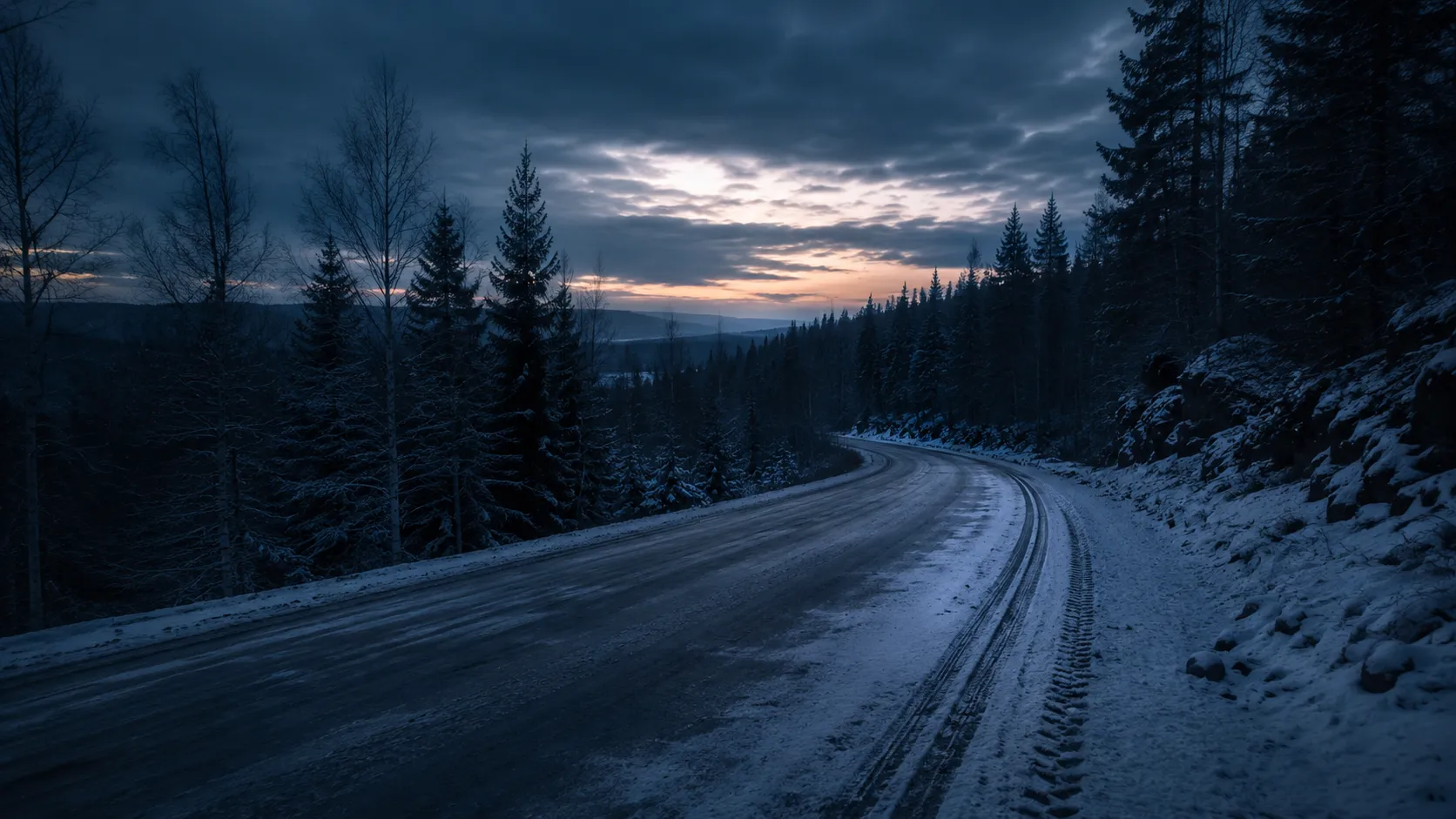
At approximately 7:30 p.m., her black Saturn sedan was involved in what appeared to be a single-car accident on Route 112, also known as Wild Ammonoosuc Road, in Haverhill, New Hampshire. A nearby resident saw and briefly spoke with a young woman believed to be Maura. According to reporting on the case, she declined an offer of help and indicated assistance was already arranged.
When police arrived a short time later, she was gone. Her car remained at the scene. She has not been seen or heard from since. Those are the facts that hold up. Almost everything else that has been written and broadcast about that night sits somewhere between informed inference and pure speculation, and it is worth keeping that line clearly in view.
The Investigation
In the days and weeks after the disappearance, search efforts were extensive. Over the years that followed, law enforcement and private citizens conducted numerous searches of the area at and around the accident scene, with no positive results. New Hampshire authorities classified the disappearance as suspicious and added it to the state’s cold case unit in 2009.
The FBI was involved early, interviewing people in Massachusetts who knew Maura. Nearly eighteen years after she vanished, in January 2022, New Hampshire State Police submitted the case to the FBI’s Violent Crime Apprehension Program, known as ViCAP, a national database intended to link cases and surface patterns investigators might otherwise miss.
The official investigation has also had to contend with a flood of public theories. In 2019, state investigators searched a northern New Hampshire house after some online theorists argued it held Maura’s remains. With the homeowners’ consent, a team cut through basement concrete where ground-penetrating radar had detected a disturbance. They found pottery shards and nothing connected to the case. Associate Attorney General Jeffrey Strelzin said state police had never found the theory credible but hoped the search would put it to rest. He also spoke to a recurring cost of the case’s notoriety, noting that it can be “a drain on resources, at times, to have to follow what really seem to be purely speculative leads,” and that “lots of people have said a lot of things, not much of it credible.”
The Breakthrough
There has been no breakthrough in the sense that word usually carries. No arrest, no recovery, no confirmed sighting, no resolution. To suggest otherwise would be dishonest to Maura and to her family.
What did happen is a different kind of turning point, and it sits at the heart of why this case matters here. Maura disappeared at the very dawn of social media, days after Facebook launched, before YouTube or Twitter existed. Her case became, in the words of later coverage, one of the first major true-crime mysteries of the digital age. Blogs, message boards, podcasts, and eventually a documentary turned a remote New Hampshire disappearance into a sprawling, participatory investigation conducted by strangers from their homes.
That attention cut both ways. It kept a cold case visible for two decades and drew resources and eyes that a quieter case might never have attracted. It also, as documented by reporters who covered the phenomenon, hardened into something darker. As one filmmaker who tracked the amateur sleuths put it, “the more complicated people’s theories got, the more dug in they got.” Maura, her family has said, was turned into a character in other people’s stories. The closest thing to a breakthrough may be the family’s own decision to reclaim the narrative, telling Maura’s story in their own words rather than ceding it to speculation.
Where the Case Stands Today
The case remains open and unsolved. On February 9, 2024, the twentieth anniversary of the disappearance, the New Hampshire Cold Case Unit released an FBI-produced age-progression photograph showing how Maura might look as an adult two decades on. Attorney General John Formella said authorities were continuing to work with local, state, and federal partners, including the FBI, to identify resources to try to advance the case, and expressed hope that the anniversary would bring renewed attention. Officials stressed that the photo’s release reflected standard practice in missing-person investigations, not a change in the case or any new information.
More than twenty years on, Maura has never been found, and no one has been charged. The New Hampshire Cold Case Unit continues to ask anyone with information to come forward.
Why This Case Still Matters
Maura Murray’s disappearance endures partly because it is genuinely unresolved and partly because of what it revealed about how the public treats unresolved cases. It is, in many ways, a parable about online sleuthing, capturing both the promise and the harm in a single story.
The promise is real. Sustained public interest can keep a cold case alive, generate tips, and pressure institutions not to forget. Maura’s family has acknowledged that awareness and engagement are part of how such cases get solved. But the harm has been just as real and far better documented than any theory about that night. Julie Murray has described relatives wrongly insinuated to be involved, her sister reduced to caricature, and a family’s tragedy distorted and monetized in the name of entertainment. She has called the attention a double-edged sword, helpful in keeping the case active yet corrosive when it fills gaps in fact with invention.
For an archive like this one, the lesson is plain and worth repeating with every such case. Curiosity is not a license, and a missing person is not a puzzle to be won. The responsible path is the same one investigators and Maura’s own family have asked for: follow credible information, name no one as responsible, preserve the presumption of innocence for everyone, and remember that at the center of the noise is a real young woman and a family still waiting for an answer.
Source discipline
Sources & Further Reading
- N.H. State Police add case of missing UMass student Maura Murray to FBI national database The Boston Globe
- On 20th anniversary of disappearance, authorities release age-progression photo The Boston Globe
- AG: No new evidence from search related to Maura Murray's disappearance New Hampshire Public Radio
- New age-progression photo of Maura Murray released on 20th anniversary ABC News
- Murder Most Heard (on the online-sleuthing phenomenon) New Hampshire Magazine
- 21 years later, Maura Murray's family still seeks answers A&E
Further Viewing
Further Viewing
20 years after Maura Murray's disappearance, family still hopes for answers · WMUR-TV (ABC affiliate)
Sober New Hampshire ABC-affiliate coverage centering Maura Murray's family, a counterweight to online speculation.
Selected as supplementary viewing from an approved source. Case on the Case does not control third-party video content, and videos are supplementary, they do not replace the written sources above.
Keep reading
More from Missing & Vanished
Brandon Swanson
Brandon Swanson, a 19-year-old Minnesota college student, vanished on May 14, 2008, after his car went off a rural road and his late-night phone call to his parents cut off mid-sentence. He was never found, and his case led Minnesota to enact Brandon's Law.

The Beaumont Children
On Australia Day 1966, siblings Jane, Arnna, and Grant Beaumont vanished from Glenelg Beach near Adelaide and were never found. Six decades on, it remains one of Australia's most influential and haunting cold cases.
Asha Degree
The 2000 disappearance of nine-year-old Asha Degree, who walked alone from her Shelby, North Carolina home into a rainstorm and vanished, and the forensic evidence that decades later reopened the case as a suspected homicide.